
Direction for Players
Players can recognize their strengths, see where they may need to improve and compare new results with their own previous assessment.
Russ Horsley explains how structured assessment can help players recognize their strengths and next development priorities, while giving coaches, scouts and clubs clearer evidence to support their judgement.
A real-world perspective from the Co-Owner and Technical Director of Phang Nga United FC.

“A player can see the areas where they are strong and the areas where they may need to improve.” Russ Horsley
Structured results make development easier to recognize. Players can see where they are now, compare later assessments with their own previous performance and understand what they can work on next.
The value is not the score alone. It is the motivation, direction and conversation that can follow when progress becomes visible.
Player Development Intelligence and the Soccer Skills Challenge are being used by people who want clearer evidence of individual progress and better-informed development conversations.
 Rob Herringer
Challenger Sports
Rob Herringer
Challenger Sports
 Ian Bishop
West Ham United
Ian Bishop
West Ham United
 James Meara
Pittsburgh Riverhounds
James Meara
Pittsburgh Riverhounds
 Jon Willis
UK Football Scouting
Jon Willis
UK Football Scouting
 Russ Horsley
Phang Nga United FC
Russ Horsley
Phang Nga United FC
 Glen Little
Ex-Premier League Player
Glen Little
Ex-Premier League Player
The same structured information can help a player understand personal development, help a coach guide the next step and help a club monitor progress more consistently over time.
Players can recognize their strengths, see where they may need to improve and compare new results with their own previous assessment.
Structured reference points can support observation, help staff monitor change and provide controlled comparison context when it is useful.
Repeatable assessment gives clubs a more consistent way to follow individual players through development, monitoring and technical decision-making.
Player Development Intelligence provides objective reference points. Coaches and technical staff provide the context, interpretation and direction. The data supports their expertize; it does not replace it.
The Soccer Skills Challenge turns practical football assessments into individual evidence that can be revisited and used in better-informed development conversations.
Establish an objective individual baseline across six practical technical and athletic challenges.
Repeat the assessment to show how each player is changing against their own previous performance.
Use private dashboards and coaching context to make strengths, progress and next development priorities easier to understand.
As Russ explains, visible strengths and improvement areas can give players both motivation and useful direction. The assessment is the starting point; what players and coaches do with the evidence is what creates development value.
Six repeatable challenges create a practical baseline. Personal dashboards then help turn results into progress evidence for players, coaches and families.
Running with the ball, sprinting, speed and agility, dribbling, turning and shooting create a broad technical and athletic baseline.
Private results make strengths and development priorities easier for the player and coach to identify together.
Later assessments show the player what has changed since their previous attempt and create a new development conversation.
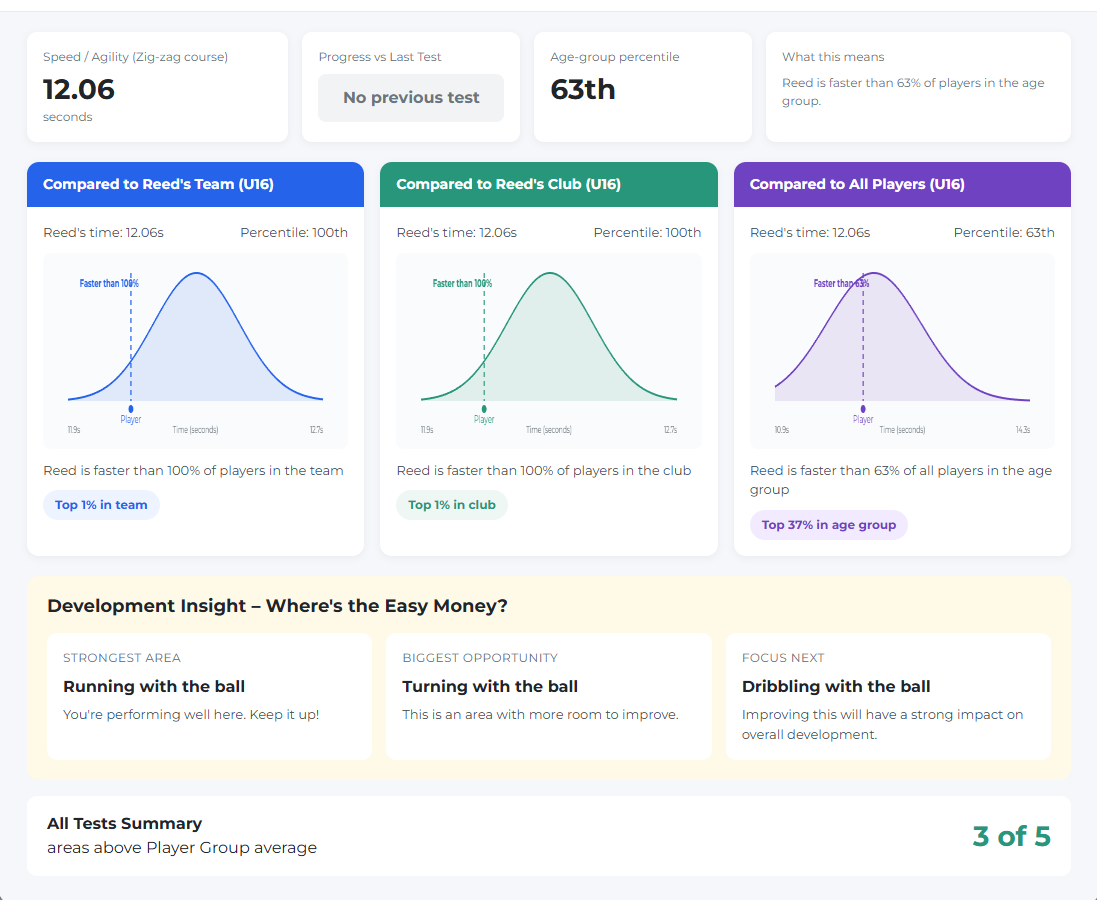
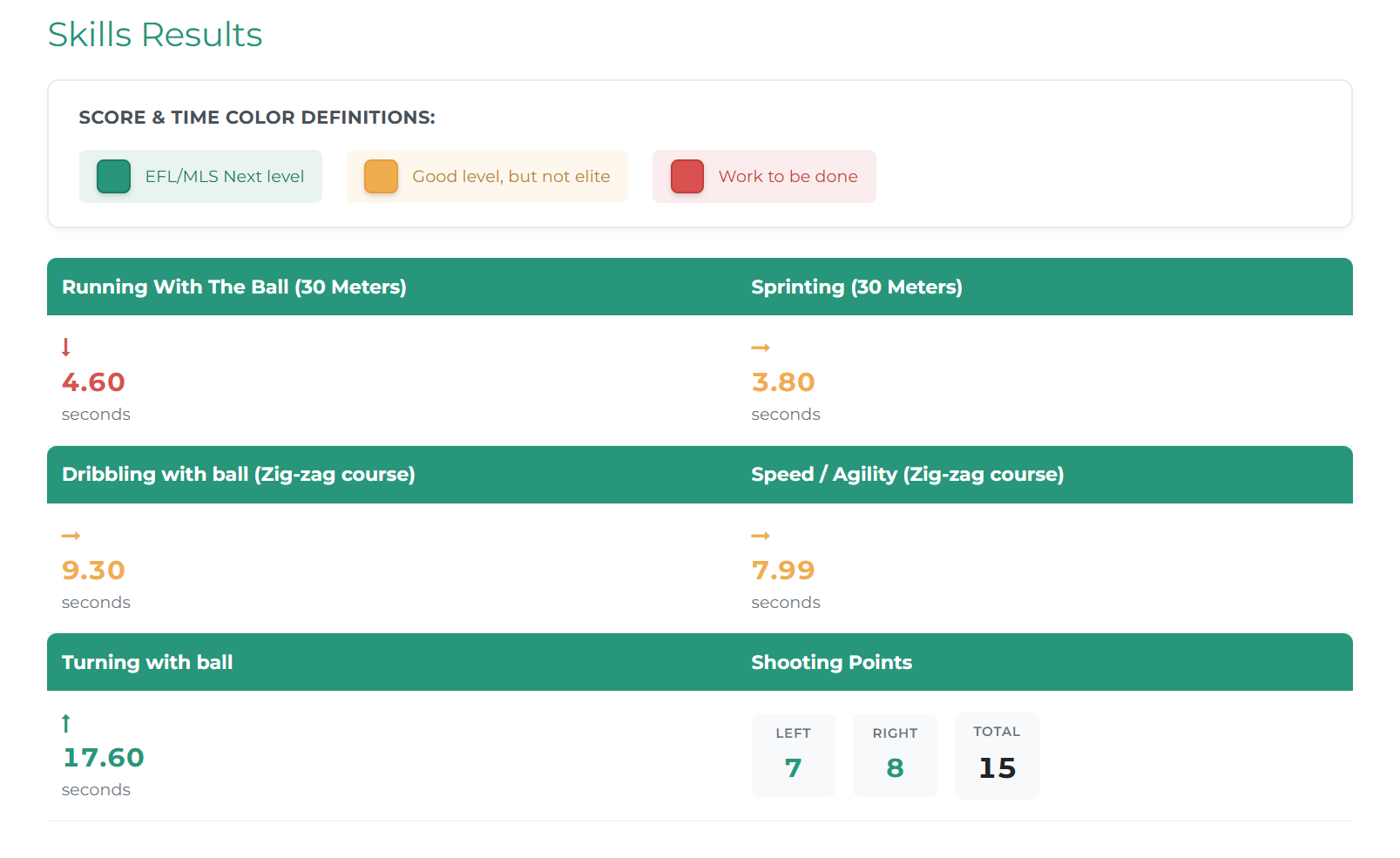
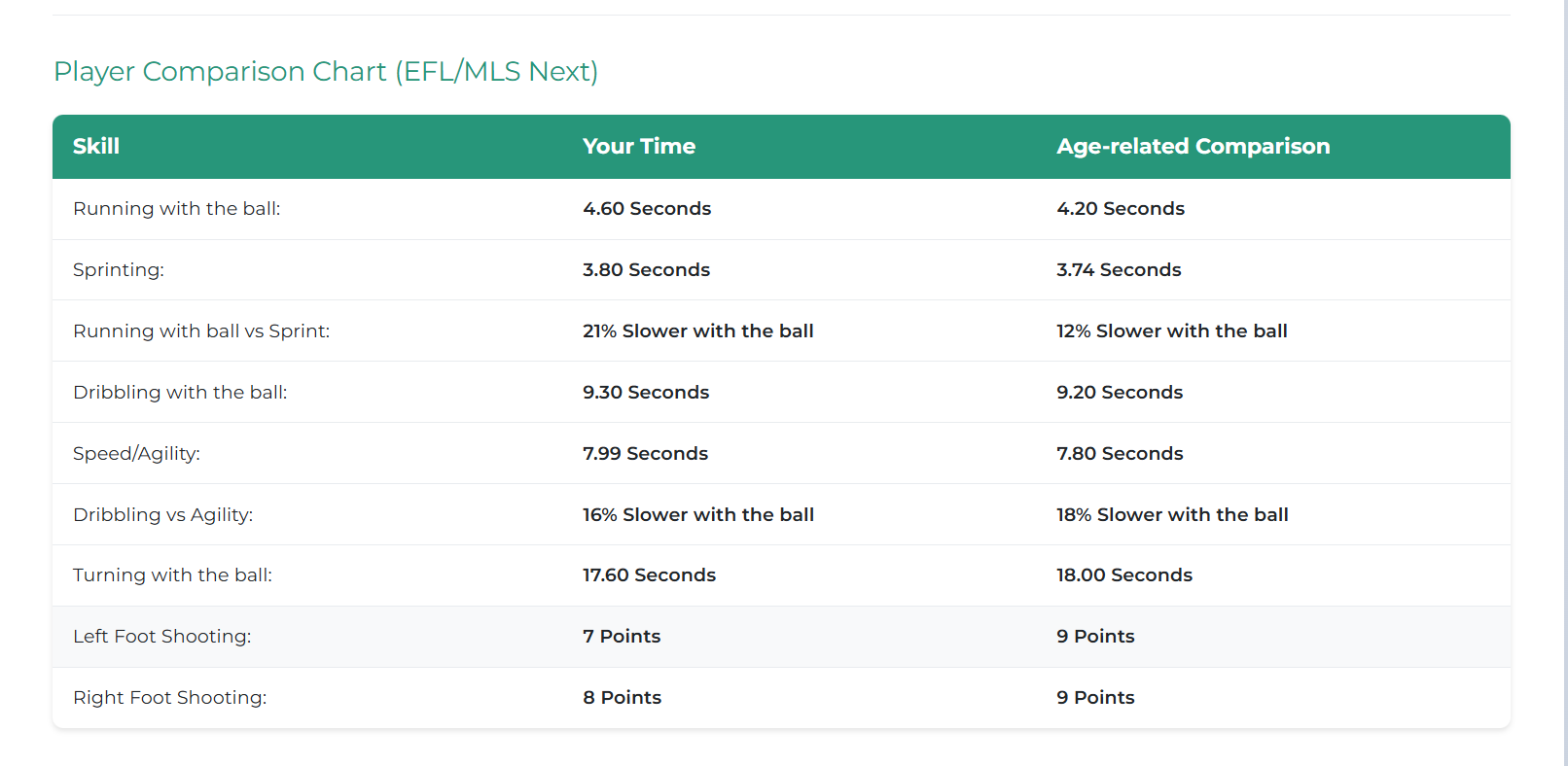
Russ sees value beyond a one-off assessment. The same framework can support ongoing player monitoring inside a club and provide additional context for coaching, scouting and recruitment decisions.
“My club will certainly be using the Skills Challenge to scout players and to continually monitor players within our club.” Russ Horsley, Phang Nga United FC
This dual use is important. Structured data can support talent identification, but its more continuous value lies in helping clubs follow what happens after a player enters the environment.
Create repeatable reference points that follow the player rather than relying only on isolated observations.
Use assessment evidence alongside match observation, training performance and coaching expertize.
Help players and families understand what is developing beyond selection, minutes and match results.
Genuine feedback on the value of making individual development clearer, more measurable and easier to understand.
The process was very easy to run, but the biggest surprise was the players. They quickly stopped comparing themselves with others and became focused on improving their own scores. The reports created some really positive conversations with players and parents.
This changes more than scouting. When development is measurable and visible, families no longer rely on guesswork or reputation. Structured benchmarking gives players clarity, coaches confidence, and academies a stronger foundation built on evidence rather than emotion.
This shifts the dynamic from hoping to be noticed to showing real, measurable progress. When players and families can clearly see development over time, decisions become calmer, more informed, and more aligned with long-term growth.

When development is structured and transparent, it changes the environment completely. Players can demonstrate their progress, parents understand the pathway, and academies build trust through evidence rather than perception.
I’ve seen this platform evolve into a structured development visibility system. It gives academies measurable insight into player progression, helping coaches demonstrate real improvement and giving families confidence in the pathway.

The Skills Assessment provides structured, measurable insight into a player’s technical and physical development. By making progress visible before match-day pressure, it gives coaches clarity and families confidence in the pathway.

Having worked in football for over 30 years, I’ve rarely seen a system that brings this level of structure and clarity to player development. By making progression measurable and visible, it strengthens trust between coaches, players, and families.

iSportScouting changes the dynamic inside academies by making development measurable and transparent. It gives coaches clarity, players direction, and families confidence in the pathway.
Explore how the Soccer Skills Challenge and Player Development Intelligence could help your organisation create clearer evidence of individual progress and better-informed development conversations.